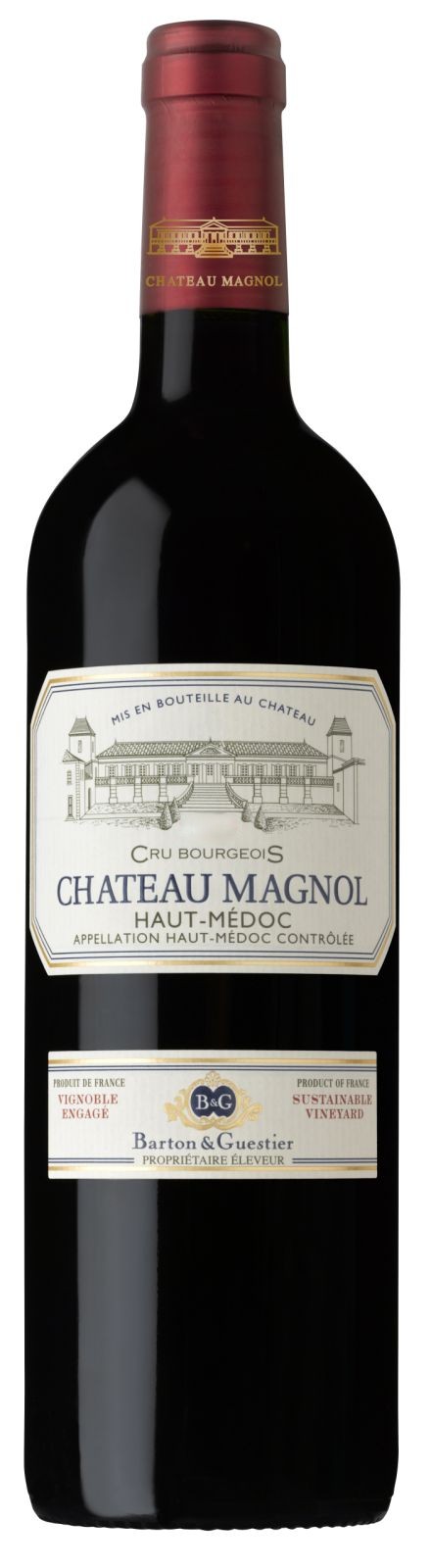
Varietal: 49% Merlot + 43% Cabernet Sauvignon + 5% Cabernet Franc + 3% Petit Verdot
Origin: Haut-Médoc region, very close to Bordeaux, on the left bank of the Gironde estuary, classified as Cru Bourgeois
Soil: sand and gravel.
Climate: mild and humid oceanic
Viticulture: 31 hectares / 74 acres; low yields, hand-cultivation, careful selection and minimal intervention in the natural ripening of the grapes
Vinification: Careful selection and minimal intervention in the natural ripening of the grapes; alcoholic fermentation usually takes place at 30°C with "one racking and return per day" -> a winemaking technique called délestage in which the juice is drained from the grape skins, allowed to settle and then pumped back onto them. This process is usually done daily during the fermentation of red wine to improve the extraction of color, flavor and tannins, introduce oxygen to the yeast and control the temperature.
Racking: The fermenting wine juice is drained from the fermentation vessel into a separate tank, leaving the skins, seeds and stems. This "cap" of solids eventually falls to the bottom.
Maceration/Separation: The liquid is allowed to drain and settle for a period of time, often 1-2 hours, to allow the cap to settle.
Return: The juice is then pumped back into the original vessel and sprayed onto the settled cap of solids. The wine rests on the skins for about 3 weeks. After alcoholic fermentation, Château Magnole is aged on its lees with controlled oxygenation. The wine is then blended and placed in oak barrels, where it rests for 12 months. To ensure an elegant, well-integrated oak presence, Bernard Foulois decided to use 350-liter French oak barrels, of which 30% are new each year. Once the barrel aging is complete, the wine is fining and bottled.
Organoleptic characteristics
Colour: deep, brilliant cherry red with purple hues
Aroma: expressive, rich and complex aroma with a solid core of black berries (cassis, black cherry), spices and wild sage, framed by a menthol tone
Taste: harmonious, well-balanced and full-bodied, with fine and elegant tannins. The aftertaste is rich and spicy with fruity and spicy aromas, giving vanilla and licorice
Food pairings: red meat and mature cheeses; try with Pyrenean cheese, black cherry jam and walnut bread; goes well with dark chocolate desserts
Serving temperature: 16-18°C
Aging potential: can be consumed now, but also has the potential to develop well in cellar until around 2035