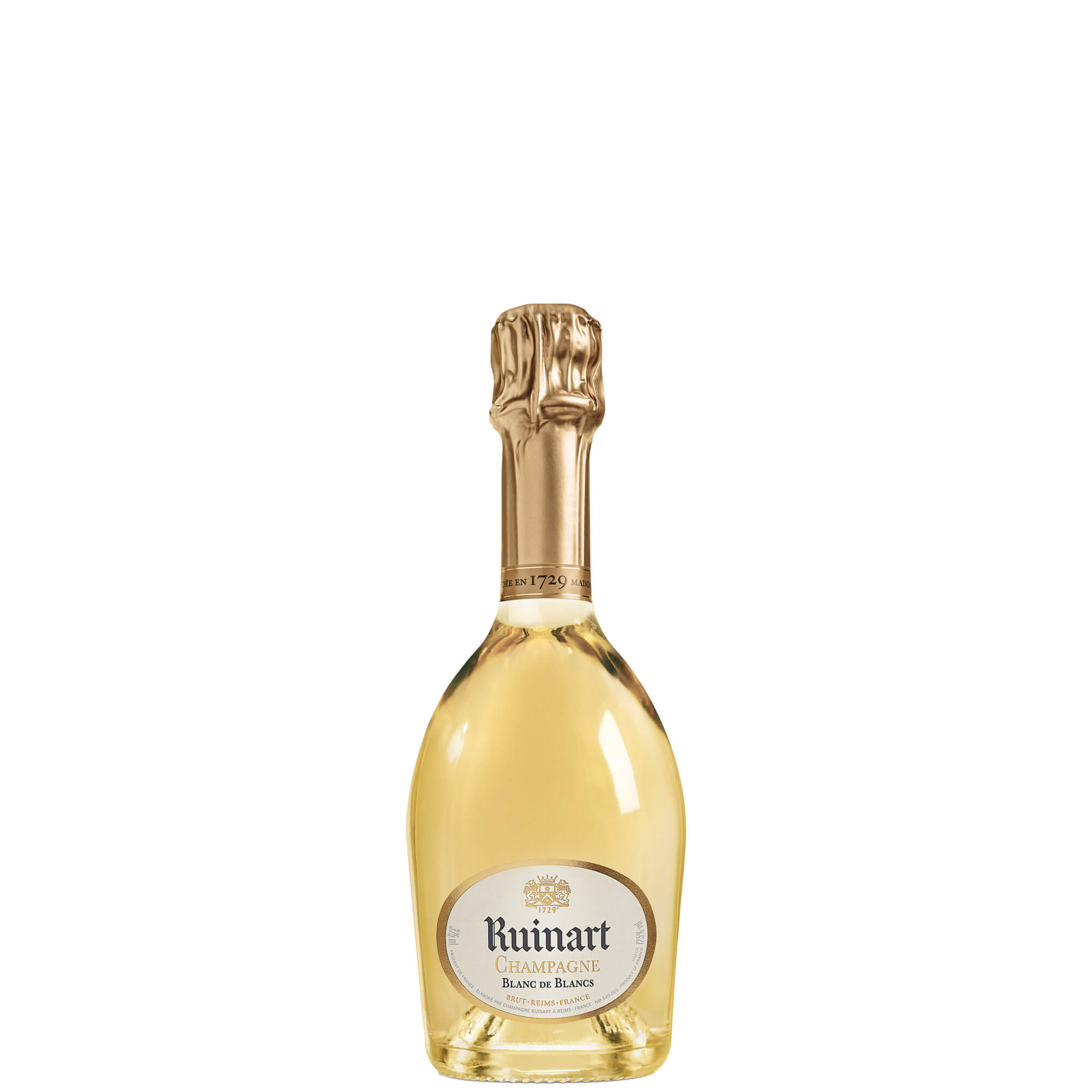
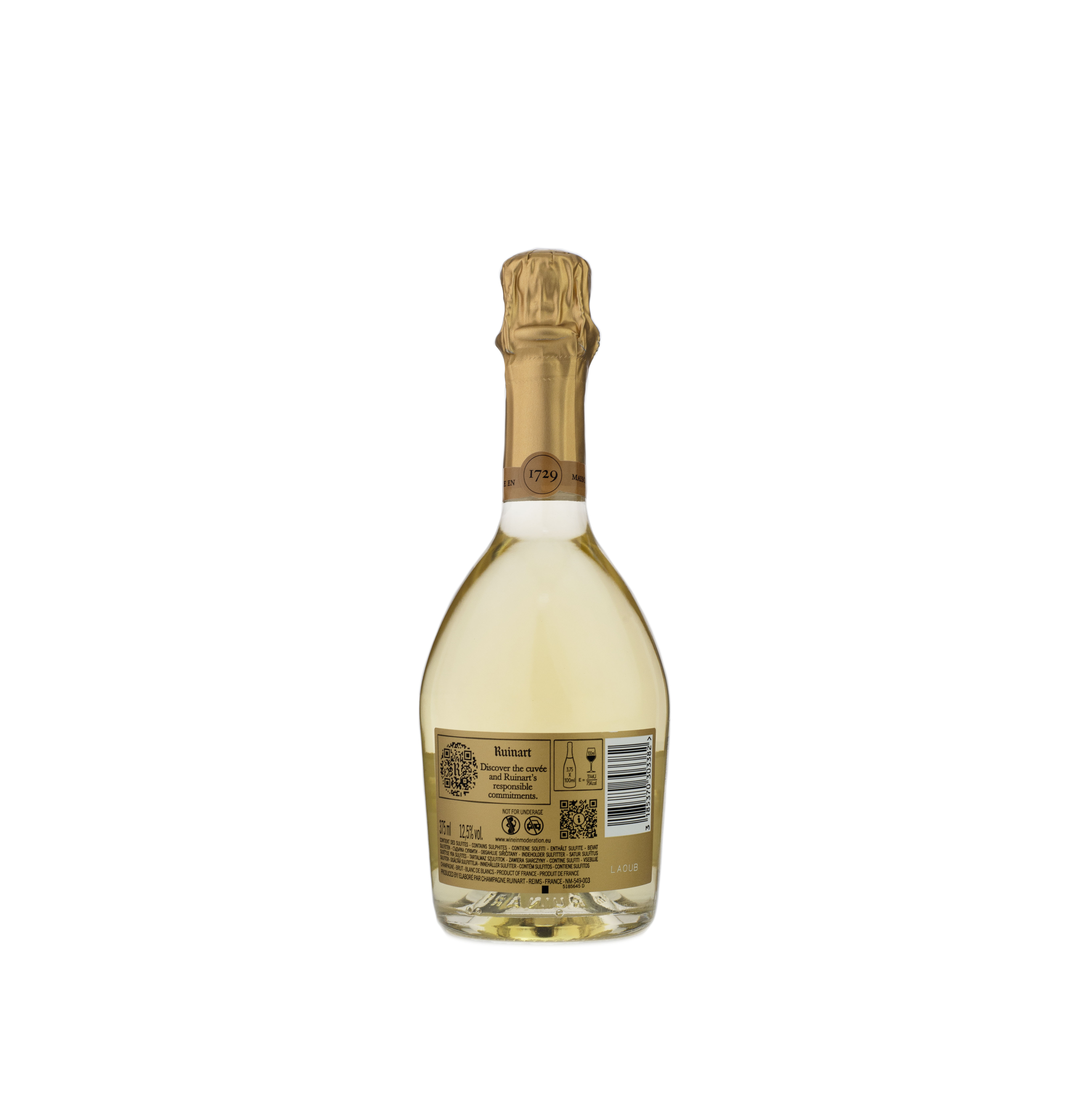
Ruinart Blanc de Blancs Brut includes around 25-30 different Chardonnay Cru varieties, mainly from the Côte des Blancs, Montagne de Reims, Sézannais and La Vallée de la Vesle, reflecting the rich diversity of Champagne terroir, including 20–30% reserve wine (reserved from older vintages)
Vinification: Alcoholic fermentation in stainless steel tanks at controlled temperature; Malolactic fermentation; 2-3 years of aging
Organoleptic characteristics
Colour: Beautiful pale yellow with light hints of almond green and jade green reflections
Aroma: The primary aroma reveals intense aromas of fresh fruit: ripe lemon, juicy pear or freshly picked peach. The secondary aromas are more floral with hints of white flowers, accompanied by a spicy note combining ginger and pink peppercorns.
Taste: The enveloping structure is highlighted by fresh aromas of ripe citrus and tropical fruits. With a long and delicate finish.
Food pairing: Chef Valérie Radou and Cellar Master Frédéric Panaïotis recommend pairing this champagne with seafood or fish
Aging potential: 12-18 months The bottles should ideally be stored lying down, in a cool place, away from drafts, noise and vibrations.
Blanc de Blanc Brut Ruinart Champagne
===
* To keep them in the best conditions, it is necessary to take into account the following criteria:
Store the bottle of champagne in a place where the humidity level is above 70%, which preserves the properties of the cork (flexibility, density). Very low humidity and high temperatures can dry out the cork and cause rapid transformation in the wine
Do not expose champagne bottles to light, keep them in the dark. Light can damage wine, and champagne is particularly sensitive to it. Clear glass bottles should be particularly well protected to prevent them from acquiring a “light” taste.
Avoid rapid changes in temperature by storing the champagne bottle between 7 - 18°C at a cool and constant temperature. High temperatures accelerate aging and deteriorate the quality of the wine. Low temperatures slow down the development of the wine and prevent it from acquiring more complexity.
Avoid impacts. The bottle should be handled with care. The pressure in the bottle (6-8 bars) is equivalent to 3 times the pressure of a car tire