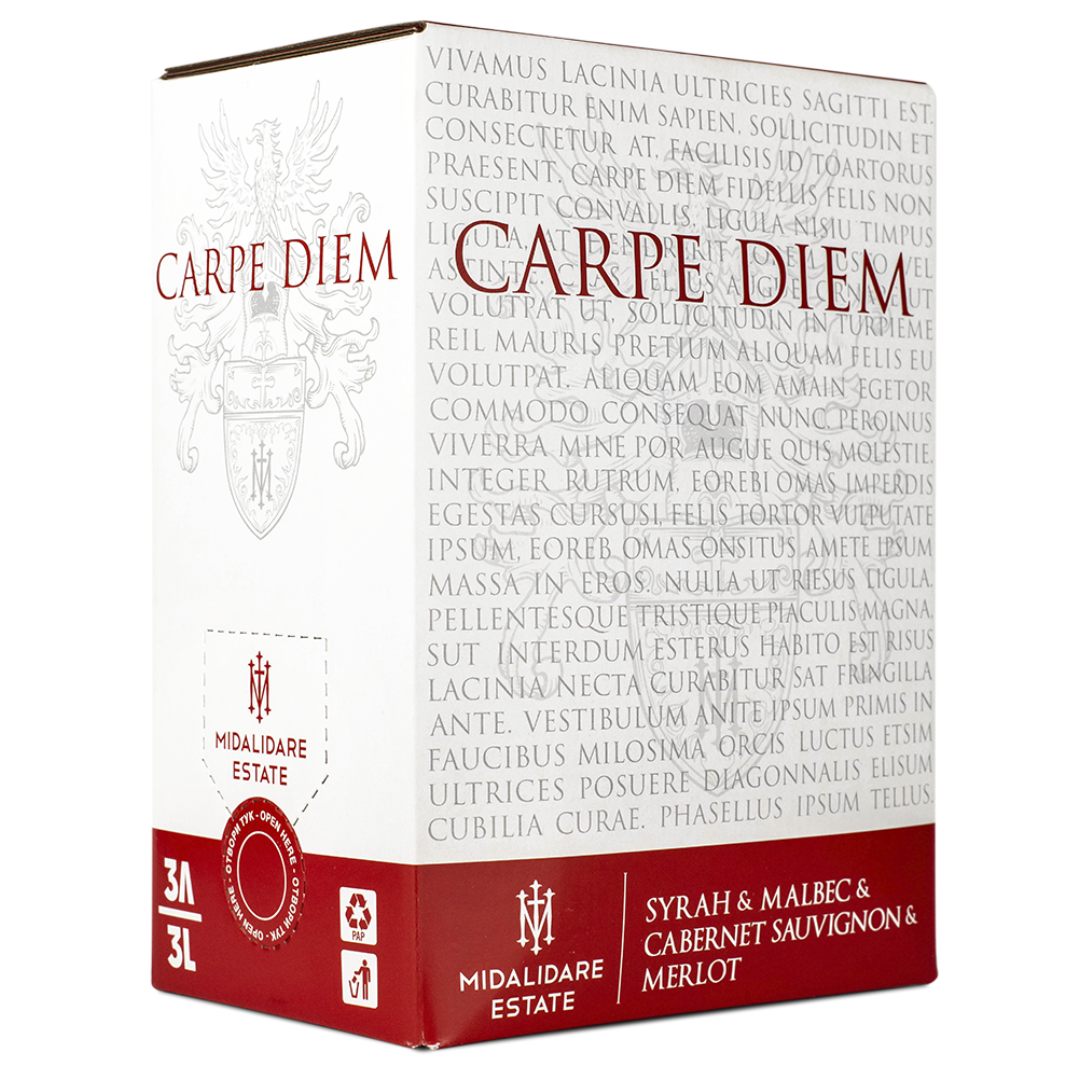
Variety: 60% Merlot + 20% Syrah + 10% Cabernet Sauvignon + 10% Malbec
Terroir: The vines are planted on the southern slopes of the Karaliets (Merlot and Cabernet Sauvignon), Shipkata (Syrah) and organically certified Dabovets (Malbec) vineyards. The plantations are at an average altitude of 290-360 meters above sea level at a 6%-10% slope. The soils are medium to low sandy and loamy on Karaliets, alluvial with a high content of limestone on Shipkata and loamy with a high content of iron oxides on Dabovets. The unique microclimate in the area of the village of Mogilovo is characterized by large temperature amplitudes, northern air currents from the wide valleys, mild winters, warm summers and an optimal ratio between sunshine and precipitation.
Viticulture: The plants are on average 15 years old. The rows are oriented East-West, with a southern exposure. The formation is double Guyot (VSP), the density is about 4000 plants per hectare. The yield is controlled. The production is regulated twice - green pruning and thinning during ripening, several times depending on the variety. The water balance is controlled daily.
Harvest: The grapes for Carpe Diem Red are picked in the early morning hours, entirely by hand in 10-12 kg boxes. The harvest takes place at the end of September (Merlot), in the middle of October (Syrah), in the second half of October (Cabernet Sauvignon) and at the end of October (Malbec). The harvested grapes are immediately transported and cooled in a cold room for 24 hours.
Vinification: The varieties are vinified separately and their ratio in the blend varies depending on the harvest. The cooled grapes are sorted manually in two stages: first, the whole bunches are sorted, the bunches are separated and the sorting of the grapes begins. The selected grapes are gravity fed into stainless steel fermenters, the shape of which imitates a barrel and is a Midalidare project. Cold maceration is carried out at a controlled temperature in order to maximize the extraction of coloring matter and fruit aromas. The grape mash is then heated and seeded with yeast. Alcoholic fermentation begins at a controlled temperature, with the cap being poured over if necessary (batonnage). After fermentation is complete, the wine is cooled and rests on the lees for post-fermentation maceration, after which part of it is transferred to 225-liter French oak barrels (barriques) for maturation. Lactic acid (malolactic) fermentation takes place at a controlled temperature. The wine is partially matured for about 6-10 months in oak, followed by rough filtration, blending and bottling.
Organoleptic characteristics
Color: Deep ruby-red color with violet hues
Aroma: Predominant aromas of ripe cherries, plums, blueberries, spicy notes and tones of cocoa and smoked meat
Taste: Juicy wine with velvety body, soft tannins, wonderful fruity taste and slightly spicy aftertaste.
Food pairing: Excellent in combination with roasted goat meat, steak with potatoes, braised beef.
Recommended serving glass: Cabernet/Merlot or Bordeaux glass (high stem, wide rim, wide opening) or standard red wine glass.
Serving temperature: 16-18°C.
Storage: in a dark, dry place at a temperature of 12-15°C. Ready to drink, but can age in the bottle for 2-4 years.
===
Carpe diem is a popular Latin expression from a poem by Horace. It translates to "seize the moment", "live today". In fact, this phrase is part of a longer one: Carpe diem quam minimum credula postero, which roughly translates to "Live today, do not put off for tomorrow".